







|
||||||
|
|
|
|
|
|
|
| About: The pygmy
banded python is
likely an undescribed species that
has historically been referred to
as the pygmy Stimson's and was
thought to be a smaller locality
of Antaresia stimsoni.
Many key phenotypic differences
between pygmy banded pythons and
Stimson's pythons differentiate
the two. The pygmy bandeds have
noticeably shorter snouts, which
also coincides with fewer average
counts of various head scales,
most notably, the the lower and
upper labial, postocular, and
anterior temporal scales. They
also have fewer ventral scales
than spotted or Stimson's pythons.
They are also smaller in total and
average size as compared with
their larger cousins and are the
second smallest python in the
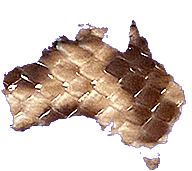
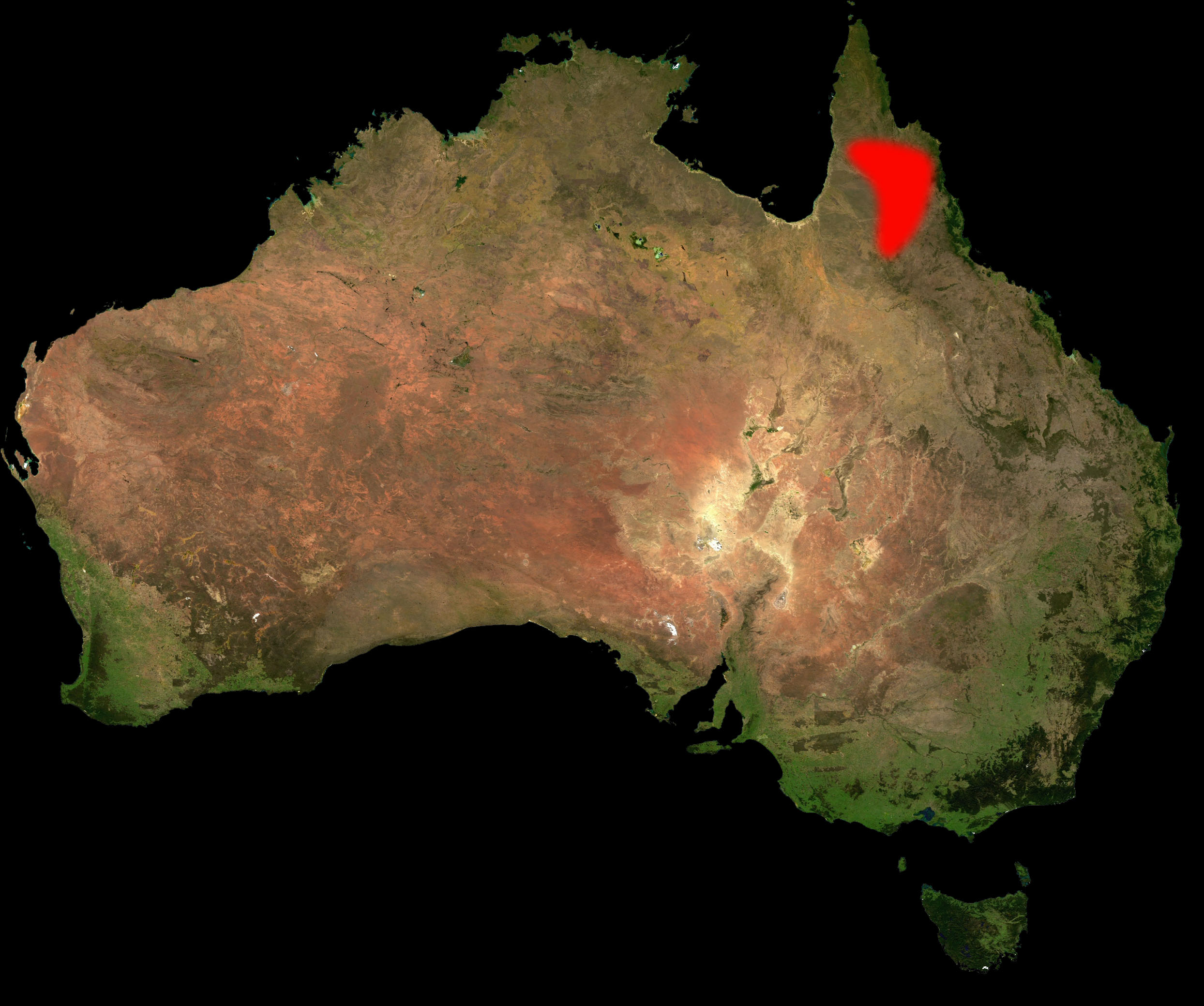
genus. Their pattern is also very different from that of a spotted or Stimson's python and this can be a distinguishing characteristic for the pygmy banded python and is why this name was selected (Julander Mutton and Birch, 2013). Casey Lazik found and photographed pygmy banded pythons in the late 80s and identified them as something unique, possibly a stunted form of spotted python. Range: These pythons are endemic to Queensland and are found in a small area of Far North Queensland. While the entirety of their range has not been fully delineated, they have been found as far northwest as the Edward River over to the east coast around Hope Vale and running south through Mount Mount Molloy and west to Georgetown. Habitat: They inhabit tree-lined creeks and river systems in semi-tropical scrublands of Northern Queensland. They are also found in marshlands. Natural History Notes: As indicated above, these pythons are associated with trees. They climb well and have been found sheltering under the bark of trees. It is presumed that their shorter nose is an adaptation to hunting geckos and frogs found under bark or in tight crevices, but this is just speculation based on what is known about their diet and habitat. Further study is needed to determine their natural history in the wild. Pygmy banded pythons are sympatric with spotted pythons (Antaresia maculosa) in many areas within their range. This overlap in range is likely a driving factor in their adaptation to using trees and feeding on smaller lizard prey to avoid competition with their larger relatives. The maximum size of this snake is around 34 in (90 cm), with an average size of 29 in (74 cm), making them the second smallest python in the world. General Notes: We were able to import a pair of pygmy banded pythons from Europe in 2025 and are happy to be working with this unique python. Our original breeders can be seen in the photos on the right and photos of a couple wild pygmy banded pythons and the habitat in which they were found can be seen below. We hope to offer this cool species in the near future. |
 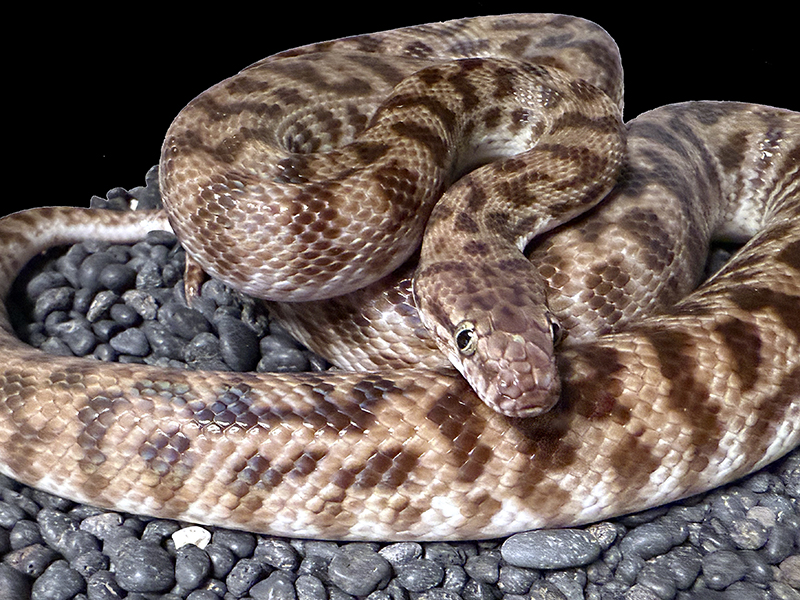
Female pygmy banded python
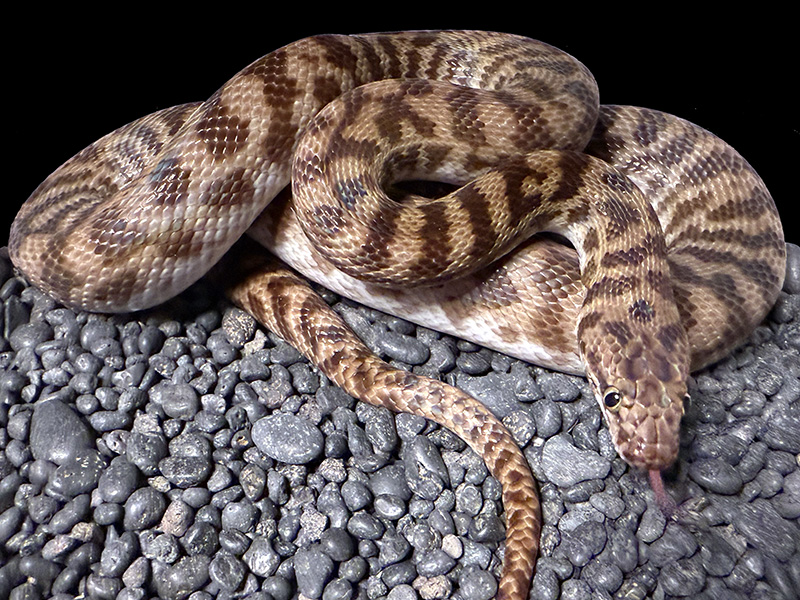
Male pygmy banded python
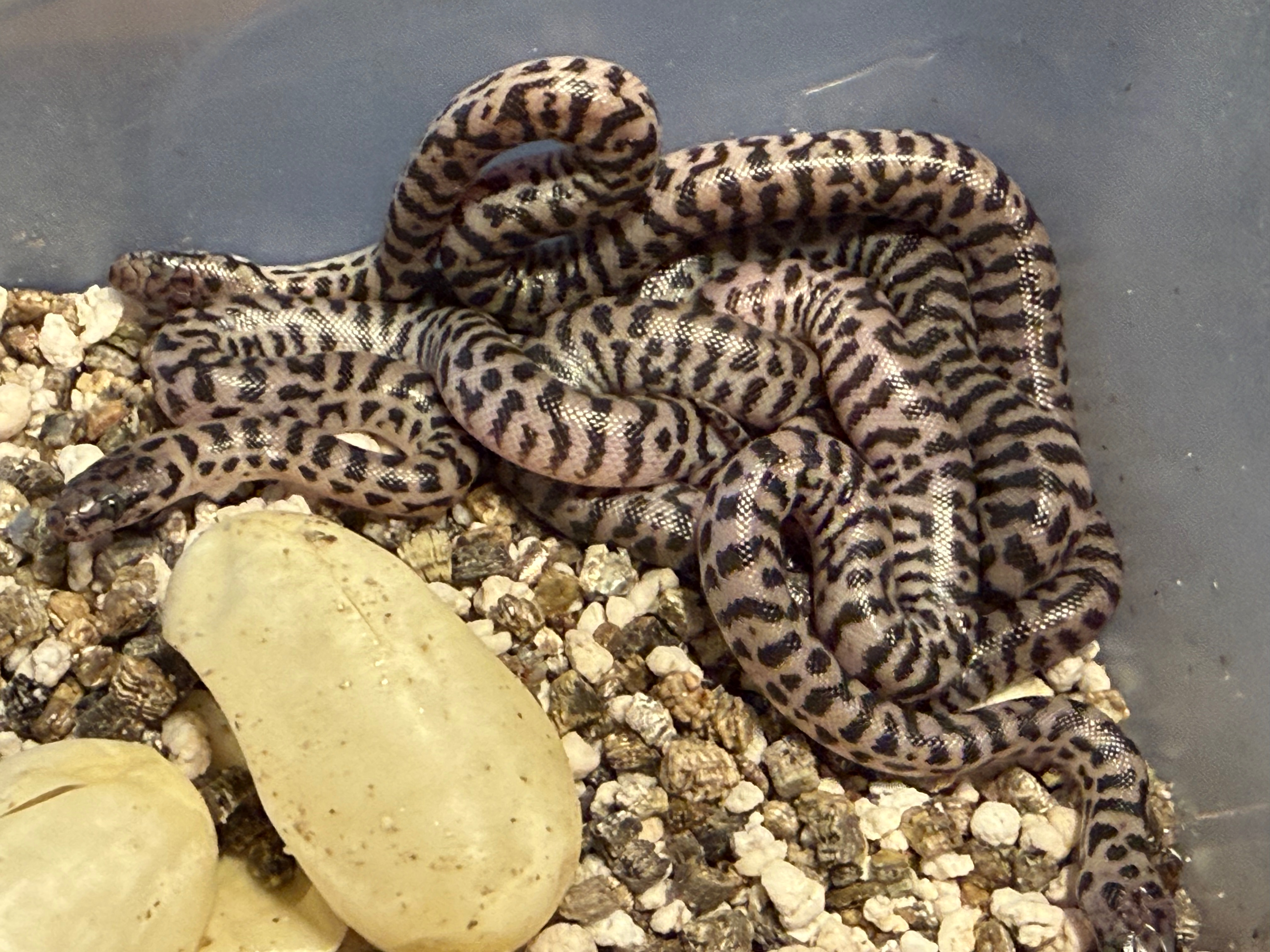
Hatchling pygmy banded
pythons (2026)
|
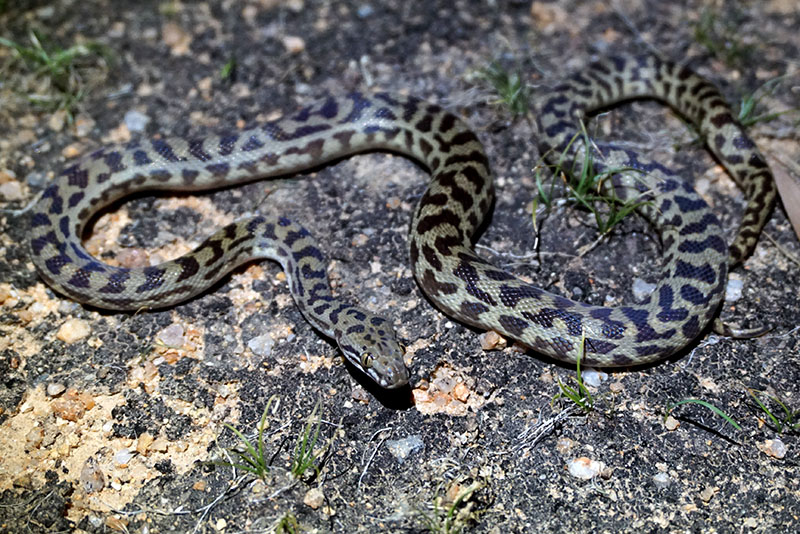
A wild pygmy banded python in
habitat near Georgetown, QLD
|
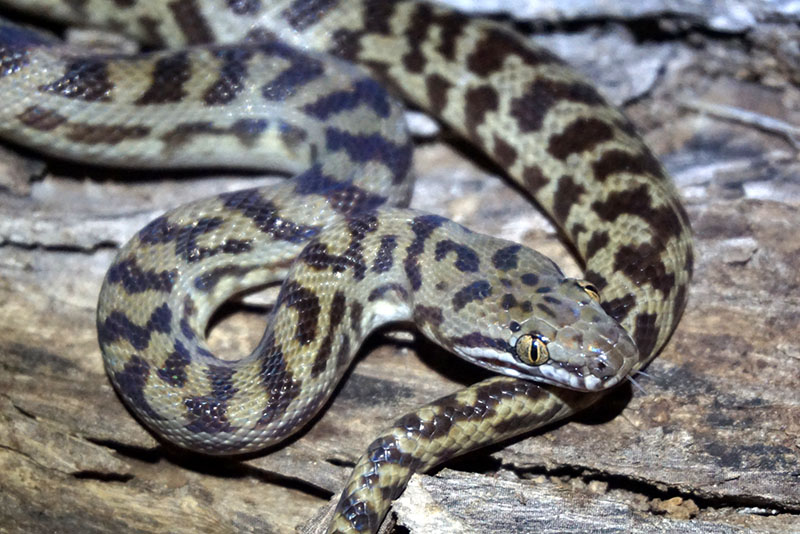
Closeup of a wild pygmy
banded python found near Georgetown, QLD
|
 Pygmy banded python in habitat near Georgetown, QLD |
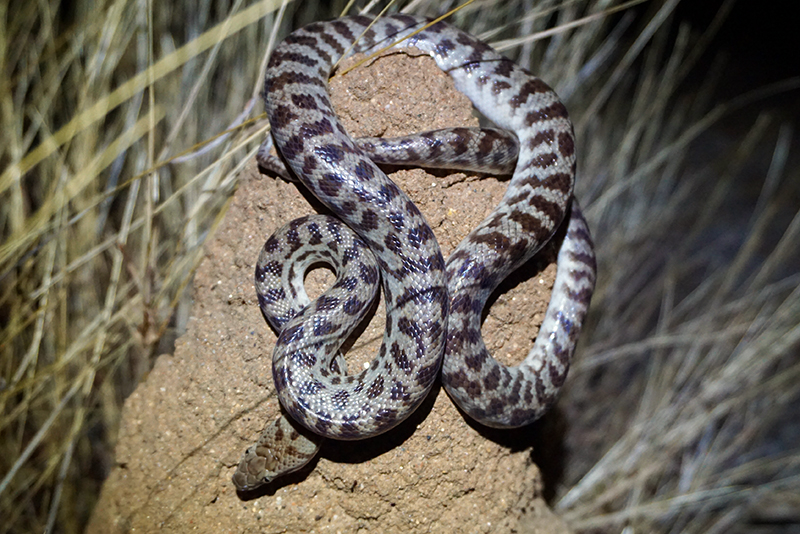 A
second pygmy banded was saved from the road.
A
second pygmy banded was saved from the road. |